 EN
EN
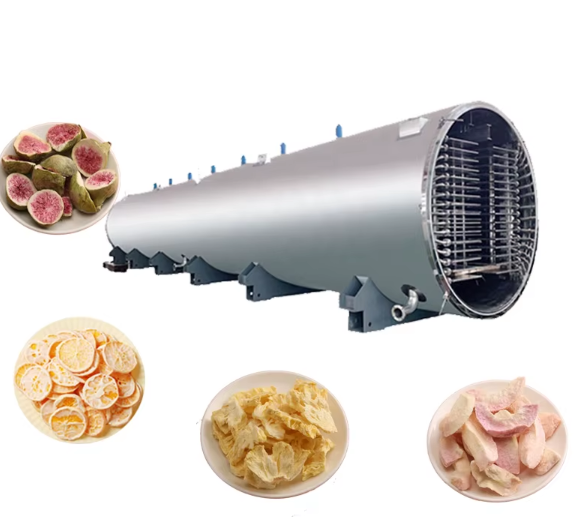
Align Freeze Dryer Machine Capacity with Sample Type and Throughput Needs
How sample characteristics (e.g., volume, viscosity, heat sensitivity) dictate chamber sizing and cycle optimization
The amount of sample determines how big the freeze dryer chamber needs to be. When batches go over 50 vials, companies generally need industrial scale equipment with condensers holding at least 10 liters. Thick substances such as collagen solutions create problems during freeze drying because they slow down ice crystal growth and vapor movement. This can make primary drying take anywhere from 15 to 30 percent longer, requiring extended hold periods to prevent partial drying. For heat sensitive biological products, maintaining shelf temperatures around -40 degrees Celsius or colder is critical for preserving their structure and effectiveness. Materials that are more robust actually work better when frozen quickly, about one degree per second, which helps form ice crystals evenly throughout. Adjusting various aspects of the drying cycle including how fast temperatures change, what pressure levels to set, and whether to include annealing steps makes a real difference. These adjustments help bring residual moisture down below 1% and stop issues like product collapse, melting back, or uneven texture. Research published in scientific journals shows that custom made drying protocols for specific applications can boost efficiency by roughly 20% compared to standard procedures.
Why throughput depends on cold trap efficiency and cycle time—not just chamber volume
The actual throughput depends more on how well the cold trap works and how optimized the cycle is rather than just looking at the chamber size. Systems that hit around minus 55 degrees Celsius in the condenser and maintain a vacuum under 0.1 mbar typically finish a full batch within 24 hours even when handling 10 liters. But watch out for bigger units. A 20 liter model with poor vapor capture might take up to 36 hours, which cuts down daily production by about a third. The sublimation rate drops off quickly once temperatures go above minus 45 degrees. For every five degree increase past that point, drying speeds drop roughly half, making cycles longer than needed. Smart automation makes a big difference too. Features like automated recipes, quick cooldown times (under an hour), and fast pressure recovery (less than five minutes between batches) help squeeze more work done each day. So when shopping for equipment, focus more on consistent condenser temperatures and reliable vacuum levels instead of getting caught up in chamber size numbers if maximizing yearly output is the goal.
Evaluate Critical Technical Specifications of the Freeze Dryer Machine
Cold trap temperature and vacuum performance: Their direct impact on drying rate and residual moisture control
The condenser temperature plays a major role in how fast sublimation happens and whether products stay stable during freeze drying. Most industry guidelines, including those from ISO 22042 and USP chapter 1211, recommend keeping temperatures between -50 degrees Celsius and -65 degrees Celsius. Lower temps mean faster vapor capture, better moisture control, and less chance of sensitive biologics collapsing. When it comes to vacuum settings, maintaining pressure under 0.3 millibar during both primary and secondary drying stages helps keep moisture moving consistently through the material. This careful control keeps residual moisture below 1 percent, which matters a lot for how long medicines can be stored before they expire. If vacuum isn't properly controlled, drying times can jump anywhere from 30 to 50 percent longer, and this affects crystal formation especially in amorphous drug forms. Getting these parameters right relative to a product's specific eutectic point and collapse temperature makes all the difference when trying to achieve results that work reliably at scale.
Automation, data integrity, and control systems for GLP/GMP-compliant freeze dryer machine operation
Freeze dryers designed for regulatory compliance typically combine PLCs with software that meets 21 CFR Part 11 standards to maintain proper documentation, track changes, and keep processes consistent. These machines can maintain shelf temperatures within ±0.5°C across different areas, run pre-approved drying profiles automatically, and create unchangeable logs whenever parameters shift, alarms go off, or operators take action. Real time sensors like moisture detectors based on capacitance measurements and properly calibrated pressure devices send ongoing information to central monitoring screens. This setup cuts down on human error during record keeping by about 45% and lets supervisors check things remotely when needed. When problems occur such as vacuum failures, overloaded condensers, or unexpected temperature shifts in shelves, the system sends out alerts right away and activates built-in safety measures. All these features make it much easier to complete the IQ/OQ/PQ validation steps and generate the electronic batch records (EBRs) that are necessary for getting approval from agencies like the FDA and EMA.
Confirm Infrastructure Fit and Operational Practicality for Your Freeze Dryer Machine
Space, power, cooling, and utility requirements across benchtop, manifold, and production-scale freeze dryer machine configurations
Infrastructure alignment determines not only installation feasibility but also long-term TCO and operational reliability. Requirements scale meaningfully across formats:
- Space: Benchtop units occupy under 1 m² and integrate into standard lab benches. Manifold systems require lateral clearance for flask access and venting. Production-scale installations demand 15–50 m² of dedicated, vibration-dampened space with reinforced flooring and unobstructed service pathways for maintenance and component replacement.
- Power: Benchtop models operate on standard 120V circuits; production systems require 208–480V 3-phase power. Electrical panel upgrades typically range from $10,000 to $50,000 depending on facility age and load capacity.
- Cooling: Air-cooled condensers in smaller units elevate ambient lab temperatures by 2–5°C—unsuitable for temperature-sensitive environments. Production systems rely on chilled water loops (5–15°C supply) to dissipate 5–20 kW thermal loads, requiring integration with facility HVAC or dedicated chillers.
- Utilities: Confirm availability of clean, oil-free compressed air (4–8 bar) for valve actuation and automation; low-pressure steam (≤1 bar) for SIP cycles; and exhaust ventilation ≥500 CFM for solvent-laden vapors. In hard-water regions, pretreatment systems ($5,000–$15,000) are essential to prevent scaling and condenser fouling.
Production-scale deployments incur 30–50% higher utility costs than benchtop alternatives—not due to inefficiency, but because of compounded thermal, electrical, and fluid-handling demands.
Ensure Regulatory Readiness and Long-Term Serviceability of the Freeze Dryer Machine
FDA/EMA Validation Expectations: From IQ/OQ/PQ Documentation to Audit-Ready Freeze Dryer Machine Software
For pharmaceutical grade freeze dryers, supporting full lifecycle validation according to FDA guidance and EMA Annex 15 isn't optional but essential. The installation qualification process checks if everything arrived correctly assembled and properly connected to utilities. When it comes to operational qualification, we need to make sure the machine performs within specific parameters. For instance, shelves should maintain temperature uniformity within plus or minus 1 degree Celsius across all zones. Condensers need to cool down to minus 60 degrees Celsius within 45 minutes max, while vacuum levels must stay stable around 0.05 millibar. Performance qualification then shows whether actual products dry consistently when processed through regular operations. Modern systems come equipped with audit ready software that includes electronic signatures, access controls based on roles, and tamper proof logs tracking every cycle's details like timestamps, who operated the machine, and any parameters that deviated from norms. Having this kind of infrastructure makes regulatory inspections much smoother and can actually speed up approval processes significantly.
Service Model Comparison: OEM Support vs. Certified Third-Party Maintenance for Critical Freeze Dryer Machine Uptime
Getting good uptime really depends on how reliable the service model is, not just how often it happens. Original Equipment Manufacturer support comes with trained techs from the factory, special diagnostic gear, and parts that are always available when needed. But there's a catch - these services typically cost 30 to 50 percent more than what third-party options offer. Third-party providers who have ISO 13485 certification and pass Good Manufacturing Practice audits can actually match the same level of technical quality at a better price point, as long as they keep proper records about equipment calibration and traceability. The real secret to keeping systems running? Regular maintenance matters most. Facilities that hit above 95% operational time usually do quarterly checks looking at things like vacuum sensor drift, buildup on condenser coils, and refrigerant levels staying stable. They also get everything recertified once a year and make sure to document why anything goes wrong when it does. No matter which approach gets picked, service agreements need to specify response times under four hours for serious issues, spare parts arriving within three days max, plus help with all the paperwork required during inspections.
Table of Contents
- Align Freeze Dryer Machine Capacity with Sample Type and Throughput Needs
- Evaluate Critical Technical Specifications of the Freeze Dryer Machine
- Confirm Infrastructure Fit and Operational Practicality for Your Freeze Dryer Machine
- Ensure Regulatory Readiness and Long-Term Serviceability of the Freeze Dryer Machine