
 EN
EN
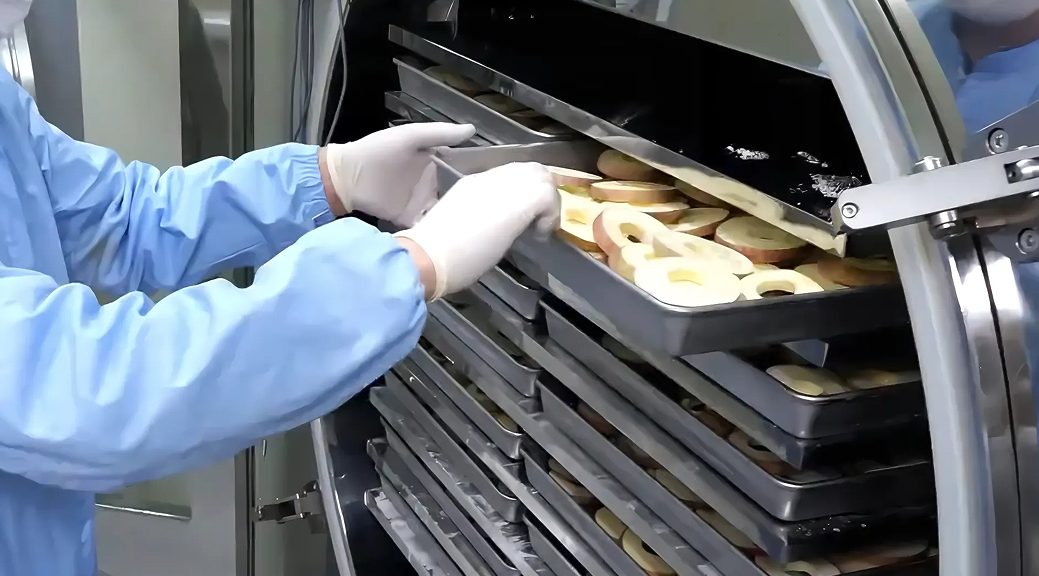
Critical Process Parameters as Primary KPIs in Lyophilization
The performance of industrial lyophilizers really hinges on how well we monitor those freeze drying parameters throughout the process. These factors have a big impact on both energy consumption and the quality of what comes out at the end. Take sublimation rates for instance they typically range between about half a kilogram to two kilograms per square meter per hour. And then there's chamber pressure during primary drying that usually stays somewhere between ten and thirty pascals. Getting these right makes all the difference in drying time and product stability. Recent research from last year showed something interesting too. When manufacturers can keep shelf temperatures within plus or minus half a degree Celsius across the whole batch area, they manage to get residual moisture down under 1.5% in almost every single production run. This kind of temperature consistency just goes to show why thermal management remains so important in modern lyophilization equipment.
Freeze Drying Process Parameters and Their Impact on Lyophilizer Efficiency
Optimal heat transfer rates (2–5 W/m²K) and ice nucleation temperatures (-40°C to -25°C) support predictable drying profiles. Modern systems use PAT (Process Analytical Technology) to correlate gas flow velocity (0.5–1.5 m/s) with sublimation efficiency, reducing cycle times by up to 30% compared to conventional methods.
Role of Temperature and Pressure Control in Lyophilizers
| Parameter | Primary Drying Range | Secondary Drying Target |
|---|---|---|
| Shelf Temp | -25°C to +25°C | +25°C to +50°C |
| Chamber Pressure | 10–30 Pa | 0.1–1 Pa |
| Vapor Temp | -50°C to -30°C | -30°C to -10°C |
Precise pressure control (±1 Pa) prevents microcollapse in biologics, while high-accuracy product temperature sensors (<±0.3°C) enable real-time endpoint prediction.
Product Temperature Profiling During Drying for Optimal Endpoint Determination
Dynamic product temperature monitoring systems reduce overdrying by 18–22% compared to fixed-time protocols. Mid-infrared spectroscopy now achieves 99% accuracy in detecting residual ice content below 0.01 g/g dry mass, offering a reliable method for endpoint determination.
Pressure Profile Monitoring in Lyophilization as a Real-Time Performance Indicator
Pressure rise tests conducted every 60–90 minutes (ΔP <0.5 Pa/min indicating phase completion) validate mass transfer rates. Automated implementation of this method accelerates process optimization by 40% compared to manual adjustments in large-scale systems.
Thermal and Shelf Performance: Uniformity and Validation Metrics
Shelf Thermal Uniformity and Its Effect on Batch Homogeneity
Maintaining shelf temperature uniformity within ±1°C is essential for consistent product quality across vials. Thermal deviations exceeding ±1.5°C can cause 12% variability in residual moisture, jeopardizing pharmaceutical stability. Multi-point validation using calibrated thermocouples identifies "hot spots" or "cold zones" that disrupt ice nucleation during primary drying.
Temperature Mapping of Shelves to Validate Thermal Performance
Modern automated mapping setups typically place around 25 sensors on each shelf to map out how heat spreads in three dimensions across the freeze dryer chamber. This kind of detailed profiling has become essential for qualifying lyophilizer performance properly. The latest wireless data loggers can actually validate processes while running under real vacuum conditions between 5 and 30 Pascals, something that reveals temperature irregularities we simply cannot see when testing at normal atmospheric pressure. According to what many manufacturers report, better mapping practices cut down on rejected batches by about 18% for biological products because it keeps every single vial safely inside the critical temperature range where materials won't collapse during processing.
Vacuum System Integrity and Condenser Efficiency as Operational KPIs
Condenser performance metrics in industrial-scale lyophilizers
How well a condenser works makes a big difference in how long processes take and how much power they consume. When looking at performance indicators, two main factors stand out: the cooling capability measured in kW per kg of ice produced, and the effectiveness of capturing ice which should be around 95% or better in newer equipment. Systems running colder than -45 degrees Celsius cut down on moisture movement problems by about two thirds when compared with condensers operating at higher temperatures according to research from Cryogenics Quarterly last year. Keeping track of defrosting intervals along with changes in heat transfer rates can reveal issues like buildup inside the system or refrigerant escaping, both of which slow down drying times and affect final product characteristics negatively.
Leak rate testing to ensure vacuum chamber integrity
The regulations set maximum allowable leak rates at under 10^-3 mbar L/s for most industrial applications. Companies that conduct helium leak checks every three months tend to see about 38 percent fewer issues related to vacuum stability compared to facilities that only test once a year. Good seals are critical because even small amounts of moisture getting into the system can add anywhere from twelve to eighteen extra hours onto each drying cycle. Most experienced operators run pressure rise tests to check how well pumps are working, looking for readings no higher than fifty microbars during the main drying phase. Some of the newer installations have incorporated continuous monitoring systems that will actually sound off an alarm if the leakage rate goes above half a percent of the total chamber volume within sixty minutes.
End-Point Detection and Process Optimization in Drying Phases
End-Point Detection Methods for Primary and Secondary Drying Phases
Getting endpoint detection right matters a lot when it comes to keeping products stable and controlling costs. These days most facilities mix PAT tools such as TDLAS technology together with basic pressure rise tests. Some recent research from last year showed that using dynamic vapor analysis cuts down on drying time somewhere between 15 to maybe even 20 percent compared to just setting fixed times. MTM measurements have been gaining traction for secondary drying processes too, but many operators still question how dependable these readings actually are in real world conditions.
Critical Quality Attributes in Lyophilization Linked to Drying Completion
Residual moisture content (RMC) below 1% is the standard for dried biologics per FDA guidelines. Other key attributes include:
- Reconstitution time (<30 seconds for injectables)
- Glass transition temperature (Tg) aligned with storage conditions
A PAT framework analysis showed RMC deviations >0.5% correlate with 89% of failed stability tests in antibody formulations.
Process Optimization in Freeze-Drying Through Dynamic Endpoint Control
Advanced lyophilizers utilize real-time mass flow sensors to dynamically adjust shelf temperature and chamber pressure, achieving 12–18% energy savings by shortening primary drying without compromising quality. Systems incorporating adaptive neural networks reduced endpoint errors by 42% in vaccine trials.
Controversy Analysis: Debate Over Manometric Temperature Measurement (MTM) Accuracy
MTM does provide a way to monitor moisture without invasive methods, though there's growing concern about how accurate it really is when scaled up. Looking at industry-wide tests from last year, researchers noticed temperature variations of around 2 degrees Celsius in nearly a third of all systems using MTM during the secondary drying phase. That kind of discrepancy matters a lot when dealing with products that can't handle much heat stress at all. Some people still argue that better calibration could fix these issues, but many manufacturers working with expensive biological materials are switching to wireless temperature sensors instead. The reason? These newer probes give much better detail about temperature distribution across different areas of the product, which makes them particularly valuable for sensitive applications where precision counts.
Performance Qualification and Scale Up Challenges in Industrial Lyophilizers
Freeze Dryer Performance Qualification (PQ) Protocols and Acceptance Criteria
Performance qualification or PQ as it's commonly called makes sure that equipment works the same way from one production batch to another. When running these tests, manufacturers typically check things like how evenly temperature spreads across shelves, usually within plus or minus half a degree Celsius. They also look at vacuum systems to see if they maintain pressure without leaking more than 0.015 millibar per minute. And don't forget about the condenser performance which needs to reach minus 80 degrees Celsius even when working at maximum capacity. According to regulations set by the European Compliance Academy back in 2023, companies must document three straight successful PQ tests done under the toughest possible conditions. This helps confirm that after all this testing, any leftover moisture stays below 1 percent, which is critical for keeping medicines stable over time.
Scale-Up Considerations for Freeze Drying Processes from Lab to Production
Moving production from small lab scale systems (about 1 square meter) to full industrial freeze dryers (over 50 square meters) usually adds around 17% extra time for primary drying because ice crystals don't distribute evenly across larger surfaces, as seen in an FDA study from 2022. What works well for small batches of about 5 kilograms simply doesn't translate when scaling up to commercial runs of 500 kilograms or more. The numbers tell the story pretty clearly too - roughly one third of all biopharmaceutical products run into problems during validation processes, according to some engineering research published last year. So what can be done about this?
- Adaptive pressure control algorithms to counteract vapor flow resistance
- Validation of heat transfer coefficients across all shelf positions
Lyophilization Process Design Challenges in Multi-Chamber Systems
Synchronizing six or more chambers introduces 11% variance in secondary drying endpoints, primarily due to differential vacuum pump wear (ISPE 2023). Leading facilities deploy cross-chamber moisture sensors and AI-driven PAT to align drying phases, cutting batch discard rates from 9.2% to 2.1% in monoclonal antibody production
Table of Contents
- Critical Process Parameters as Primary KPIs in Lyophilization
- Thermal and Shelf Performance: Uniformity and Validation Metrics
- Vacuum System Integrity and Condenser Efficiency as Operational KPIs
- End-Point Detection and Process Optimization in Drying Phases
- Performance Qualification and Scale Up Challenges in Industrial Lyophilizers