 EN
EN
Superior Food Protection and Compliance with Safety Standards
Meeting FDA and EU Regulations Through Hygienic Thermoforming Packaging Machine Processes
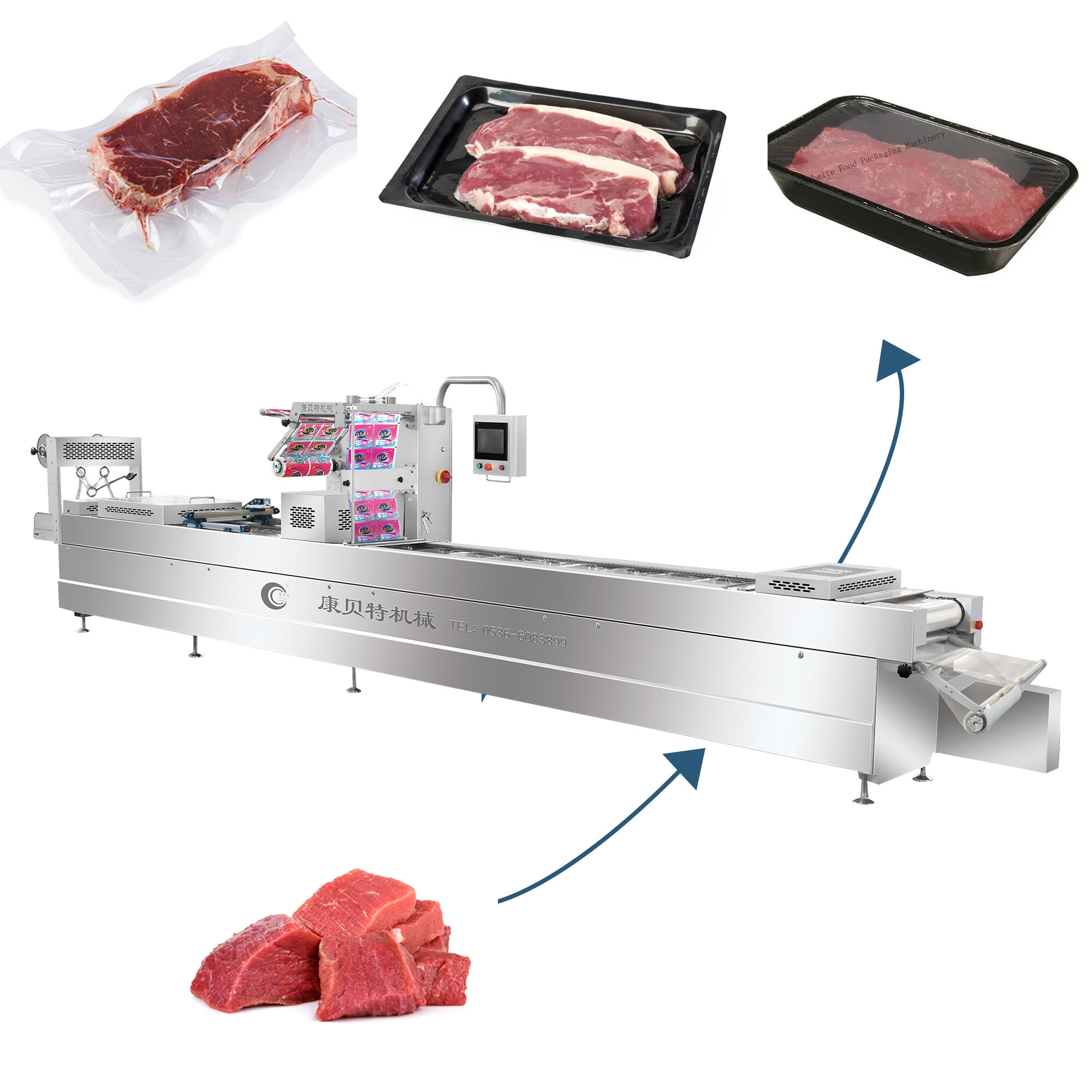
Thermoforming packaging machines today keep food safe by using automated processes that limit how much humans touch the products during packaging. The equipment actually complies with those important FDA standards listed as 21 CFR Part 177 when it comes to food grade plastics, plus they follow EU rules under Regulation (EC) No 1935/2004 regarding materials safety. A recent look at packaging compliance from 2024 showed something pretty impressive too. Machines with built in sterilization features cut down on germs by around 83 percent compared to old fashioned manual approaches. That kind of reduction makes all the difference for companies making ready to eat meals where contamination risks are especially high.
Barrier Protection Against Contamination, Spoilage, and Puncture in Processed Foods
Multi-layer thermoformed containers combine HIPS (High Impact Polystyrene) and APET (Amorphous Polyethylene Terephthalate) to achieve oxygen transmission rates below 2 cm³/m²/day. This barrier significantly slows lipid oxidation in snacks and prevents grease leakage in frozen meals, preserving product quality despite supply chain stresses like vibration and temperature shifts.
Sterile Packaging Environments Enabled by Automated Thermoforming Systems
Thermoforming lines compatible with Class 100,000 cleanroom standards use HEPA-filtered air and UV sterilization tunnels between cycles. Servo-driven forming stations maintain ±0.2mm precision, ensuring hermetic seals for modified atmosphere packaging (MAP) while keeping surface bioburden below 1 CFU/cm² during filling operations.
Extended Shelf Life via Modified Atmosphere Packaging (MAP) Integration
How Thermoformed Containers Enhance Shelf Life Through Precise MAP Compatibility
Thermoformed trays provide airtight seals critical for Modified Atmosphere Packaging (MAP), which replaces oxygen with preservative gas blends—typically nitrogen and carbon dioxide. This process inhibits microbial growth by up to 60% compared to conventional packaging. The form-fitting design reduces headspace, helping maintain stable gas concentrations throughout distribution.
Maintaining Optimal Gas Mixtures for Perishable Goods
| Product Type | Recommended Gas Blend | Shelf Life Extension |
|---|---|---|
| Fresh Meat | 70% CO₂, 30% N₂ | 5–7 days |
| Dairy Products | 60% N₂, 40% CO₂ | 14–21 days |
| Seafood | 40% CO₂, 30% N₂, 30% O₂ | 10–12 days |
These tailored atmospheres slow spoilage while preserving sensory qualities, addressing MAP’s core challenge: balancing antimicrobial effects with the respiration needs of different foods.
Case Study: 40% Longer Freshness for Seafood Using Thermoformed Trays
A 2023 study by the International Food Protection Institute found that scallops packaged in MAP-enabled thermoformed trays lasted 10 days under refrigeration—up from 7 days—thanks to a multi-layer PETG/EVOH/PP structure that blocked 99.8% of oxygen ingress while allowing controlled moisture release.
Innovations: Oxygen Scavengers and Active Packaging
Advanced thermoforming now incorporates oxygen-absorbing films and ethylene inhibitors directly into container walls. One emerging innovation uses pH-sensitive color indicators to signal freshness loss—particularly useful for multi-ingredient ready meals where spoilage detection is complex.
Design Flexibility and Brand Differentiation Through Custom Thermoformed Packaging
Custom Shapes, Sizes, and Branding Options Using Thermoforming Packaging Machines
Thermoforming gives manufacturers the ability to craft containers that fit products just right, all while incorporating those special brand elements companies love so much. What sets this method apart from traditional rigid options is how quickly they can test out new shapes. Think about those divided containers for meal prep or those oddly shaped clamshells we see at bakeries these days. The whole point here is that this kind of flexibility really sticks in people's minds. According to some research published last year by Packaging Digest, around three quarters of shoppers tend to remember items better when they come in something that stands out visually from the competition.
Complex, Retail-Ready Designs for Ready Meals and Convenience Foods
Thermoforming is really good for making those detailed features like microwave vents or those sauce compartments that won't leak, all without needing costly tool changes. What's interesting is how quickly production lines adapt these days. One minute they're cranking out those deep frozen dinner trays, next thing you know they've switched to shallow deli containers within just 20 minutes flat. Retailers love this flexibility because their shelves need packages that look ready to sell right off the truck. Plus, these packages come with tamper proof seals and proper UPC zones already built in, which saves everyone time during restocking.
High-Clarity PETG and Color Printing for Enhanced Visual Appeal
PETG offers 92% light transmittance—comparable to glass—and supports full-color CMYK printing directly on the surface. Modern thermoforming systems enhance visual impact with in-mold labeling, matte/gloss texturing, and metallic foil stamping. These capabilities help frozen entrées achieve 23% higher shelf engagement than cardboard alternatives (Food Engineering 2024).
Tooling Adaptability Supporting Small-Batch, High-Variety Production Runs
Aluminum molds used in thermoforming cost 40–60% less than injection molding tools, making limited editions and regional variants economically feasible. Brands can produce small batches—such as 5,000 holiday-themed trays—at less than $0.07 per unit, enabling niche gourmet producers to test new markets efficiently.
Cost Efficiency and High-Speed Production for B2B Scalability
Lower Tooling Costs and Faster Changeovers Compared to Injection Molding
Thermoforming offers significant cost advantages over injection molding, with tooling expenses typically 60–80% lower for similar runs. Quick-change systems allow format transitions in under 15 minutes—far faster than the 4–8 hours required for traditional retooling—boosting efficiency for multi-product manufacturers.
Thermoforming Packaging Machine Output: Up to 12,000 Cups/Hour With Full Automation
High-speed automated thermoformers can produce up to 12,000 food-grade containers per hour. This output exceeds rotational molding by 300%, all while maintaining ±0.25mm dimensional accuracy during continuous 24/7 operation.
Operational Synergy With Robotics, Vision Inspection, and Inline Sealing Systems
Top-tier thermoforming lines integrate robotic handling and real-time vision inspection to achieve defect rates below 0.1%. Inline sealing eliminates manual intervention, cutting labor costs by 40% in ready-meal packaging applications.
Data Point: 30% Reduction in Unit Cost for Large-Scale Dairy Packaging
A 2023 analysis of yogurt cup manufacturing showed thermoforming reduced per-unit costs by 30% compared to blow molding, driven by thinner wall construction (9–12% less material) and 22% faster cycle times.
Sustainability and Material Innovation in Thermoformed Food Packaging
Modern thermoforming aligns with sustainability goals without compromising performance. Common materials like polypropylene (PP), high-impact polystyrene (HIPS), and PETG are durable and widely recyclable. Innovations in polylactic acid (PLA), a plant-based polymer, enable 85% thinner walls than traditional designs, reducing material use while maintaining strength.
Lightweight Durability Improving Transport Efficiency and Reducing Damage
Thermoformed trays weigh 30% less than glass or metal equivalents, reducing shipping fuel consumption by up to 18% annually. Their structural integrity also limits product movement during transit, lowering damage claims by 22% among frozen food suppliers (PMMI 2023).
Recyclability Challenges and Advances in Mono-Material Thermoformed Packaging
Although 74% of consumers prefer recyclable packaging, multi-layer thermoformed containers have historically posed sorting challenges. New mono-material solutions using PP or PET now achieve 92% compatibility with curbside recycling programs, and automated sorting systems identify these materials 40% faster than mixed-polymer alternatives.
Biodegradable Solutions: PLA-Based Trays for Eco-Conscious Processed Food Brands
PLA trays made from sugarcane or cornstarch decompose within 12–18 months under industrial composting conditions—94% faster than polystyrene. A 2025 sustainable packaging review confirmed that PLA performs equally well in preserving meat freshness while cutting carbon emissions by 68% compared to fossil-fuel plastics.
Balancing Performance and Environmental Responsibility in Modern Packaging
Manufacturers can now meet ISO 14001 environmental standards without sacrificing speed. Automated thermoforming lines process PLA at the same rate as traditional plastics—up to 1,200 units per hour—demonstrating that sustainability and scalability can coexist in modern food packaging operations.
Table of Contents
- Superior Food Protection and Compliance with Safety Standards
- Extended Shelf Life via Modified Atmosphere Packaging (MAP) Integration
- Design Flexibility and Brand Differentiation Through Custom Thermoformed Packaging
-
Cost Efficiency and High-Speed Production for B2B Scalability
- Lower Tooling Costs and Faster Changeovers Compared to Injection Molding
- Thermoforming Packaging Machine Output: Up to 12,000 Cups/Hour With Full Automation
- Operational Synergy With Robotics, Vision Inspection, and Inline Sealing Systems
- Data Point: 30% Reduction in Unit Cost for Large-Scale Dairy Packaging
-
Sustainability and Material Innovation in Thermoformed Food Packaging
- Lightweight Durability Improving Transport Efficiency and Reducing Damage
- Recyclability Challenges and Advances in Mono-Material Thermoformed Packaging
- Biodegradable Solutions: PLA-Based Trays for Eco-Conscious Processed Food Brands
- Balancing Performance and Environmental Responsibility in Modern Packaging