
 EN
EN
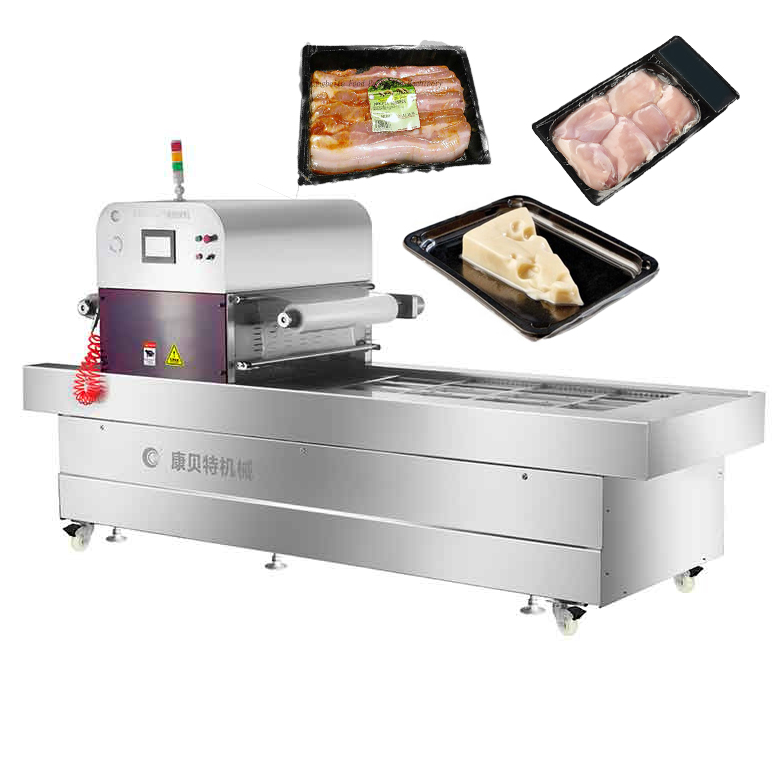
Diagnosing and Resolving Sealing Problems in Vacuum Skin Packaging Machines
Seal integrity directly impacts product shelf life and safety in vacuum skin packaging operations.
Understanding Vertical and Horizontal Seal Failures
Vertical seal failures typically stem from uneven heat distribution across sealing bars, while horizontal failures often relate to pressure inconsistencies. A 2024 Aberdeen Group study found 68% of packaging defects originate from temperature deviations exceeding ±5°C during sealing cycles.
Common Causes of Inconsistent Seal Quality
The top three culprits include:
- Material incompatibility: Film layers with mismatched melting points
- Residual contamination: Oil/grease deposits reducing adhesive properties
- Mechanical misalignment: Tray positioning errors causing 23% of wrinkles (PMMI 2023 data)
The Impact of Contamination, Misalignment, and Material Variation
A single 0.5mm film thickness variation can increase seal failure rates by 40% according to IAFP research. Particulate contamination exceeding 50 microns creates microchannels enabling oxygen ingress—critical for perishables requiring <0.5% residual oxygen levels.
Case Study: Fixing Weak Seals in High-Speed Production
A frozen seafood processor reduced seal failures from 12% to 2% by:
- Implementing laser-aligned tray guides (±0.1mm accuracy)
- Upgrading to multi-zone heated seal bars with PID temperature control
- Installing automated film tension monitoring
The $18k retrofit paid back in 7 months through reduced rework and material waste.
Proper diagnosis requires simultaneous monitoring of four parameters: temperature (175–205°C typical range), dwell time (0.8–1.5 seconds), pressure (40–60 psi), and vacuum level (≤5 mbar absolute).
Temperature Control Issues Affecting Vacuum Skin Packaging Machine Performance
Identifying Temperature Inconsistencies During Sealing Cycles
Even minor temperature changes around ±5°C are responsible for about a quarter of all packaging issues in vacuum skin systems according to Feeco's 2023 report. When operators look closer they notice problems showing up as strange seal patterns when checked under UV light, leftover air bubbles trapped inside packages, or film that doesn't shrink evenly throughout. Looking at industrial thermal images tells another story though. Most of these failures actually come from heat spreading unevenly across the seal bars rather than just not enough heat overall. The real problem isn't the total amount of heat applied but how it gets distributed during the sealing process.
Calibration Errors and Sensor Malfunctions Leading to Heat Fluctuations
Modern machines use 12–18 thermal sensors requiring quarterly calibration. Key issues include:
| Issue Type | Impact | Detection Method |
|---|---|---|
| Sensor drift | ±8°C variance | Historical data comparison |
| Contact degradation | Localized cold spots | Infrared thermography |
| Control lag | Delayed response | Cycle time analysis |
Upgrading to military-grade sensors reduced heat-related downtime by 41% in poultry packaging applications (RUIDA Machinery).
Strategy: Implementing Real-Time Thermal Monitoring for Consistent Results
Manufacturers at the forefront are combining IoT temperature sensors with smart prediction software to keep temperatures within half a degree Celsius during sealing operations. These systems handle changes in room conditions automatically, tweak heating settings based on film type variations, and can actually spot potential equipment problems weeks before they happen. Plants that have switched to this tech see around 40 fewer rejected products per batch and save about 18 percent on their energy bills compared to old school PID controllers. To make sure everything stays accurate over time, most facilities run regular checks against those official NIST standards we all trust so much.
Addressing Slow Vacuum Cycle Times and Pump Efficiency
Evaluating Vacuum Pump Performance and Detecting Leaks
When cycle times start dragging, it's usually because pumps are wearing out or there's some kind of leak nobody noticed yet. According to research published last year on packaging efficiency, nearly 4 out of every 10 slow cycles happen when vacuum systems drop below about 85% efficiency mark. Techs need to run those pressure decay tests for at least a minute and get their hands on thermal imaging equipment too. This helps spot those tiny leaks hiding in valve seats or around O-rings that regular inspections might miss. Putting all this together with live pump data makes a big difference. Watching how vacuum levels change over time and measuring how long it takes to reach target pressure gives technicians much better insight into what's actually going wrong with the system.
Upgrading to Dual-Stage Pumps for Faster Evacuation
Switching from single stage to dual stage pumps can cut down on evacuation time anywhere between 22 to 40 percent, all while keeping the vacuum level under 5 mbar at the end. Industry data indicates that these two stage systems get to 500 mbar much quicker too, about 43 percent faster compared to what we see with standard single stage setups. For products that contain moisture, this kind of improvement really matters because getting rid of air fast helps prevent water movement that could ruin seals later on. A real world example comes from a meat processing plant somewhere in the Midwest where they saw their production cycle speed up by roughly 18 percent once they installed those dual pumps along with variable frequency drives.
Optimizing Chamber Design and Vacuum Path Layout
Streamlined vacuum paths with radiused corners reduce airflow turbulence, cutting 0.5–1.2 seconds per cycle. For high-speed applications:
- Chamber Geometry: Shallow, wide chambers evacuate air faster than deep vertical designs
- Surface Finish: Polished surfaces (Ra ≤ 0.8μm) minimize air pocket formation
- Valve Placement: Position vacuum valves within 15cm of the product zone
Top manufacturers now use computational fluid dynamics (CFD) simulations to optimize airflow during design, reducing prototype testing costs by $14k per iteration (Packaging Dynamics 2023).
Managing Electrical and Control System Failures
Vacuum skin packaging machines rely on precise electrical coordination to maintain packaging integrity. With automated systems managing 87% of modern food packaging workflows (Food Engineering 2023), even minor control faults can halt production.
Recognizing Early Signs of PLC, Relay, or Wiring Issues
Keep an eye on those PLCs for common error codes such as E5 when there are communication problems or E12 if the power supply seems unstable. Technicians will tell stories about relay chatter and that unmistakable smell of burnt insulation coming from terminal blocks right before something goes completely south. According to a recent maintenance report from last year, around two thirds of all those annoying intermittent shutdowns turned out to be caused by corrosion eating away at wires in damp locations. When things just won't quit acting up, grab hold of those standard electrical safety guidelines everyone refers to. They usually contain good info on how to stabilize voltages properly without blowing through too much time or money.
Common Failure Points in Automated Control Systems
Top failure vectors include:
- Vibration damage to ribbon cables in high-speed machines
- Moisture ingress into servo motor connectors
- Capacitor degradation in frequency drives after 8,000+ cycles
Control boards fail 2.3x faster in facilities without temperature-controlled electrical rooms.
Balancing Automation Benefits with Maintenance Complexity
While automated diagnostics reduce human error, they require firmware updates and sensor calibrations every 500 operating hours. Leading plants pair predictive algorithms with manual cross-checks—technicians verify 10% of automated readings weekly using multimeters and infrared thermometers. This hybrid method cuts false-positive alarms by 41% while ensuring ISO 22000 compliance.
Preventive Maintenance and Advanced Troubleshooting Strategies
Effective maintenance requires structured checklists covering daily seal integrity checks, weekly vacuum pump oil inspections, and monthly electrical contact reviews. A 2023 industry analysis found standardized checklists reduced unplanned downtime by 34% compared to reactive approaches.
Extending Seal Bar Lifespan Through Cleaning and Alignment
Residual film deposits cause 72% of premature seal bar failures (Food Packaging Safety Report 2024). Best practices include:
- Post-shift abrasive cleaning with non-metallic pads
- Bi-weekly alignment verification using laser measurement tools
- Thermal calibration after every 500 cycles
Case Study: Doubling Seal Bar Life With Upgraded Materials
A seafood processor increased seal bar lifespan from 6 to 12 months by switching to tungsten carbide-coated bars. The $18k upgrade eliminated $56k/year in replacement labor and scrap costs, achieving ROI in 4 months.
Leveraging Remote Diagnostics and IoT for Predictive Maintenance
Modern CMMS platforms integrate vibration sensors and thermal imaging to predict failures 14–21 days in advance. One meat packaging plant using IoT-enabled monitoring reduced seal-related recalls by 89% while maintaining preventive maintenance compliance at 98%.
Cost Comparison: Reactive vs. Proactive Approaches
| Metric | Reactive Maintenance | Preventive Program |
|---|---|---|
| Annual Downtime Hours | 220 | 48 |
| Seal Bar Replacements | 9 | 3 |
| Energy Cost/Unit | $0.18 | $0.14 |
| Data reflects 12-month study of 22 packaging facilities (Packaging Operations Quarterly 2023) |
Table of Contents
- Diagnosing and Resolving Sealing Problems in Vacuum Skin Packaging Machines
- Temperature Control Issues Affecting Vacuum Skin Packaging Machine Performance
- Addressing Slow Vacuum Cycle Times and Pump Efficiency
- Managing Electrical and Control System Failures
- Preventive Maintenance and Advanced Troubleshooting Strategies