 EN
EN
Superior Food Quality Retention with Rapid Freezing Technology
How Small Ice Crystals Preserve Cellular Structure and Sensory Attributes
Fast freezing tech can get things down to around -40 degrees F within minutes instead of waiting for hours. This quick drop prevents those big ice crystals from forming that damage food cells when frozen the old fashioned way. When cells stay intact, food keeps its original texture, holds onto flavors better, stays moist, and maintains its colors too. Berries frozen this way remain nice and plump with all their juice inside. Vegetables don't turn dull gray but keep their bright colors. Meat and fish also maintain their natural flavors without needing any added stabilizers or preservatives to make them look good after thawing.
IQF vs. Conventional Freezing: Comparative Data on Texture, Color, and Nutrient Stability
Individual Quick Freezing (IQF) delivers measurable advantages across core quality metrics:
| Quality Metric | IQF Results | Conventional Freezing | Source |
|---|---|---|---|
| Texture Preservation | 95% cell integrity | 60–70% cell integrity | USDA Studies 2023 |
| Color Retention | ΔE <2 (negligible change) | ΔE 5–8 (visible fading) | Food Chemistry Journal |
| Vitamin C Retention | >90% after 6 months | 70–75% after 6 months | USDA Nutrient Database |
The rapid thermal drop in IQF systems also suppresses enzymatic degradation more effectively than slower methods—extending shelf life naturally while preserving nutritional value.
Enhanced Food Safety Through Microbial Control
Cryogenic Freezing Kinetics and Pathogen Suppression (e.g., Listeria monocytogenes)
Cryogenic freezing, which typically involves either liquid nitrogen or carbon dioxide, can bring down product temperatures to around minus 70 degrees Celsius in just a few minutes. What makes this method so effective is that it happens so fast microbes don't have time to adapt. The quick cooling creates tiny ice crystals that actually tear apart bacterial cell membranes. When dealing with cold-loving bacteria such as Listeria monocytogenes, studies show cryogenic freezing reduces these harmful organisms by three to five logs through processes that break down essential enzymes and weaken their overall structure. Scientists have found that this sudden temperature drop kills off pathogens about 40 percent better than regular slow freezing methods. Because of this effectiveness, many food safety experts now consider cryogenic freezing an important part of HACCP plans, stopping dangerous bacteria from growing and producing toxins right at the start of processing.
Operational Efficiency and Cost Savings from Modern Freezing Equipment
Energy Performance: Ammonia-CO₂ Cascade Systems vs. Legacy Compressor Designs
The ammonia and carbon dioxide cascade system marks significant progress in making industrial freezers more efficient. These systems work by separating natural refrigerants into different temperature areas, which cuts down energy consumption around 30% compared to old style compressors, plus gives much better temperature stability. Variable frequency drives adjust motor power based on what's actually needed at any given moment instead of running full speed all the time, while smart defrost features kick in only when necessary rather than following rigid schedules. Mid sized operations can expect their yearly running expenses to drop somewhere between fifty thousand and a hundred grand after switching to this technology. Many plant managers find these savings make a big difference in their bottom line over time.
Reduced Cycle Time and kWh/Ton Gains in High-Throughput Tunnel and Spiral Freezers
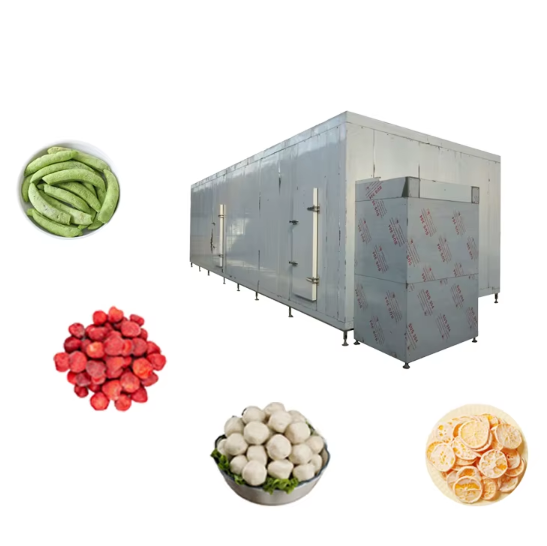
When it comes to industrial freezing, modern tunnel and spiral freezers are making big improvements thanks to better heat management and smart air flow design. These systems can cut freezing time anywhere from 25% to almost half compared with old batch methods, which means factories get more done without sacrificing product quality. The latest tech includes things like counterflow air systems and belts that stay insulated during operation. This kind of innovation brings energy costs down dramatically, sometimes getting as low as 0.6 kWh per ton frozen instead of the usual 1.2 across the industry. For food processors dealing with large volumes, this translates to handling around 15 to 20 tons every hour while saving roughly a third on electricity bills. What used to be an expensive bottleneck is now becoming a money maker for many operations looking to scale up production sustainably.
Extended Shelf Life and Reduced Supply Chain Waste
Modern freezing equipment extends shelf life by locking in quality through rapid, uniform crystallization—preserving cellular integrity, sensory attributes, and nutrients from production through retail. According to 2023 cold chain studies, this capability reduces supply chain spoilage by up to 30%. Benefits cascade across stages:
- Production: Less pre-processing ingredient loss
- Distribution: Greater scheduling flexibility and reduced transit spoilage
- Retail: 25% fewer markdowns and disposals of expired goods
- Consumer: Longer at-home freshness, lowering household food waste
By maintaining product integrity from factory to freezer, advanced freezing systems reduce disposal costs, optimize inventory and logistics, expand market reach, and advance sustainability goals—turning waste reduction into measurable competitive advantage.